Built to bill, not to win
Look closely at what your case management system is organized around, and you will find the timesheet and the invoice at the center of it.
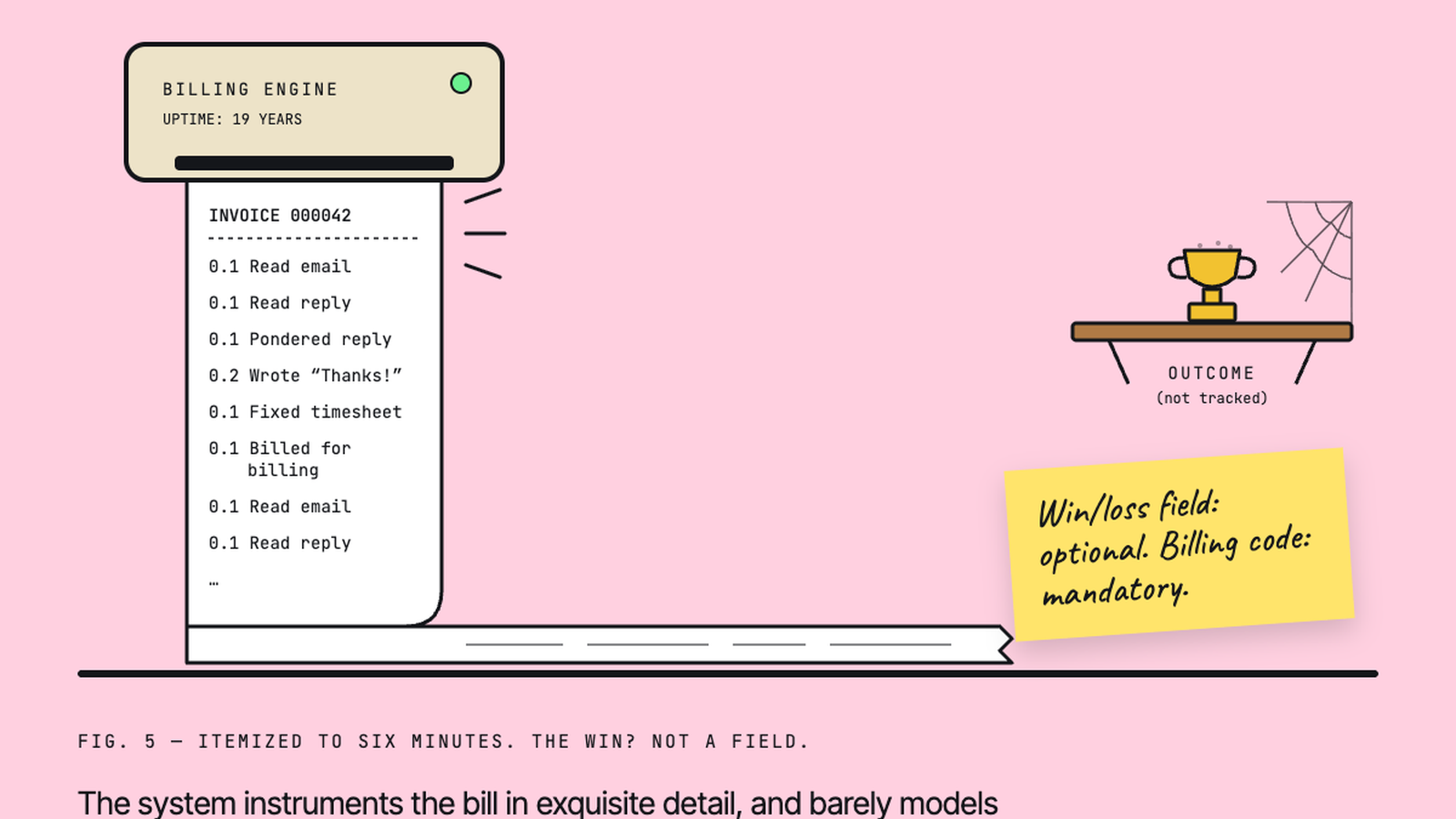
That is not an accident. These systems were born in the business model of the billable hour, and everything about them optimizes for one thing: capturing time and turning it into a bill. The timekeeper, the rate, the code, the invoice, all of it beautifully instrumented.
Now ask what sits at the center of your firm's actual work. It is the case. The outcome. The client who wins or loses based on what your people do. And ask how well your software models that. In most firms, the answer is barely. The case is a container the billing hangs off. The outcome is not even a field. The thing you are in business to produce is the thing the system understands least.
This is the quiet mismatch at the heart of legacy legal software. It was built to bill the work, not to advance it. For a contingency firm, where there is no hourly bill at all, the mismatch is almost comical. For an hourly firm, it means your system is brilliant at the part that comes after the value is created, and nearly blind to the value itself.
Software should be organized around the work you do, not the bill you send.
It does not have to be this way.