You didn't go to law school to feed a database
Here is a question worth asking at your firm. How many hours a week do your lawyers and staff spend feeding the system, instead of doing the work the system is supposed to support?
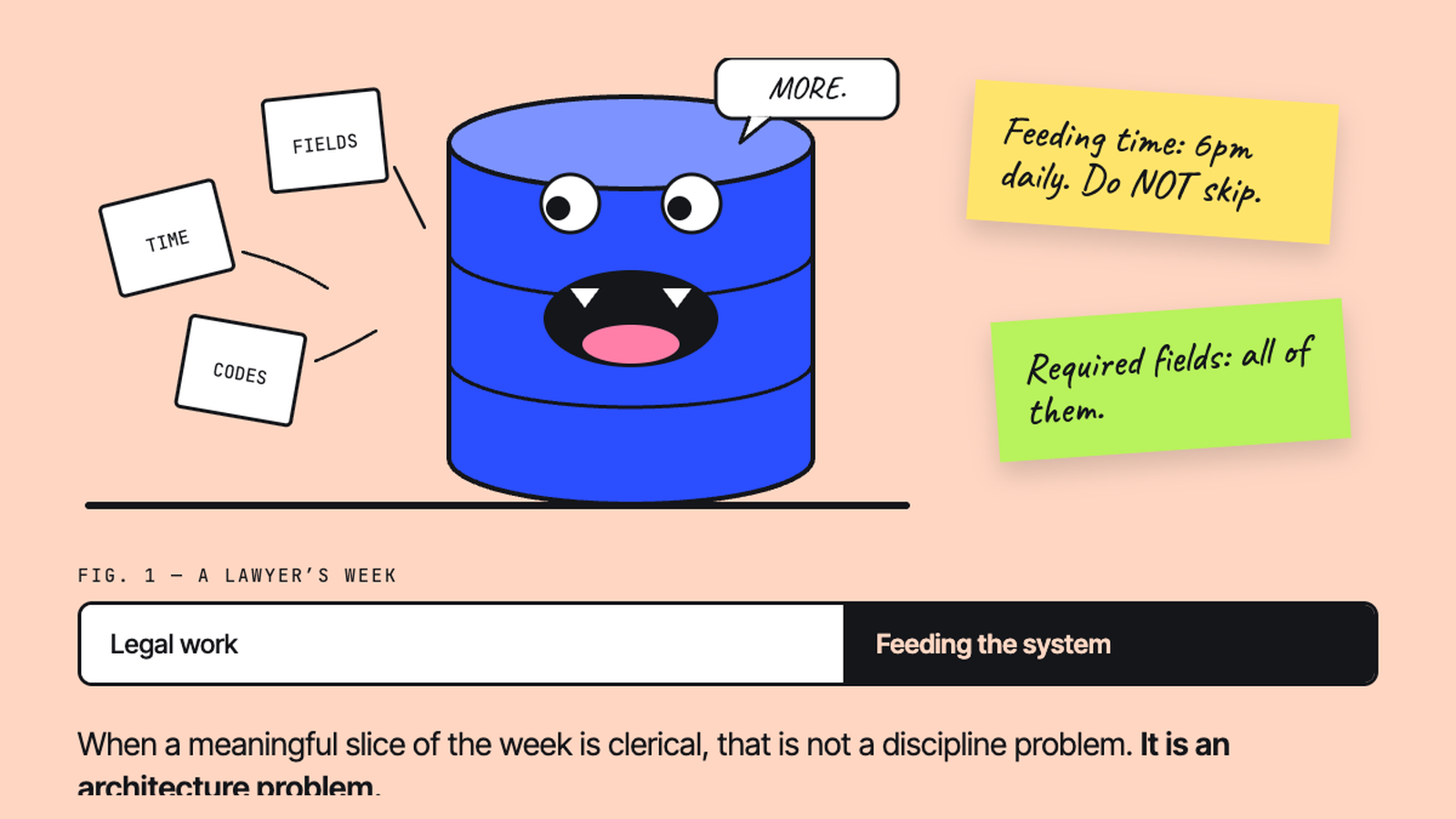
Count it honestly. Time entry, chased and reconstructed at month end. Case statuses updated by hand. The same client detail keyed into intake, then the case file, then the billing system. Documents filed, re-filed, and renamed so they can be found again. Notes copied out of email into the matter so there is a record.
None of that is legal work. All of it is the tax your software charges for the privilege of storing your data.
The tell is in the language your people use. They "update the system." They "get it into the system." The system is a destination they serve, not a tool that serves them. Somewhere along the way the relationship inverted, and because it happened slowly, nobody flinched.
A firm's most expensive people should spend their time on cases and clients, not on data entry that exists only because the software cannot do its own. When a meaningful slice of a lawyer's week is clerical, that is not a discipline problem. It is an architecture problem.
You did not go to law school to feed a database. Neither did anyone on your team.
It does not have to be this way.